
Thanksgiving planning gets easier when you make decisions in the right order. A centerpiece can wait. Knowing how many people are coming, what kind of meal you want, and what your kitchen can handle gives every later choice a useful starting point.
First: settle the shape of the gathering
Confirm your likely guest count, a meal time, and whether you want a seated dinner, a buffet, or a more casual arrangement. Ask about food preferences and dietary needs before assigning dishes or buying ingredients.
Decide what you want to make yourself and what you are happy to accept from guests. If someone asks what to bring, offer a specific job: a ready-to-serve side, dessert, drinks, or extra serving spoons. Explain whether the dish will need oven space when it arrives.
Next: build a menu your kitchen can manage
Write down the dishes you want, then mark which need the oven, stovetop, refrigerator, or counter space. If several dishes need the same appliance at the same time, simplify before shopping.
Choose the dishes that matter most to your household. You may want a traditional main dish and favorite sides, or a smaller menu with just one family favorite. A meal can feel generous without including every Thanksgiving dish you have ever enjoyed.
For each dish, note who is responsible, what serving dish it needs, and whether any preparation can happen earlier. Follow the recipe’s timing and storage guidance when making that plan.
Then: check the practical pieces
Count seats, plates, glasses, and flatware. Mix what you already own before buying a matching set. Check that serving utensils and a place for each dish are included in your count.
Think through how people will move around the room. A separate drink station may free up the kitchen. An empty surface can become a dessert table later. Leave a spot for bags and coats so chairs remain available for guests.
What can wait
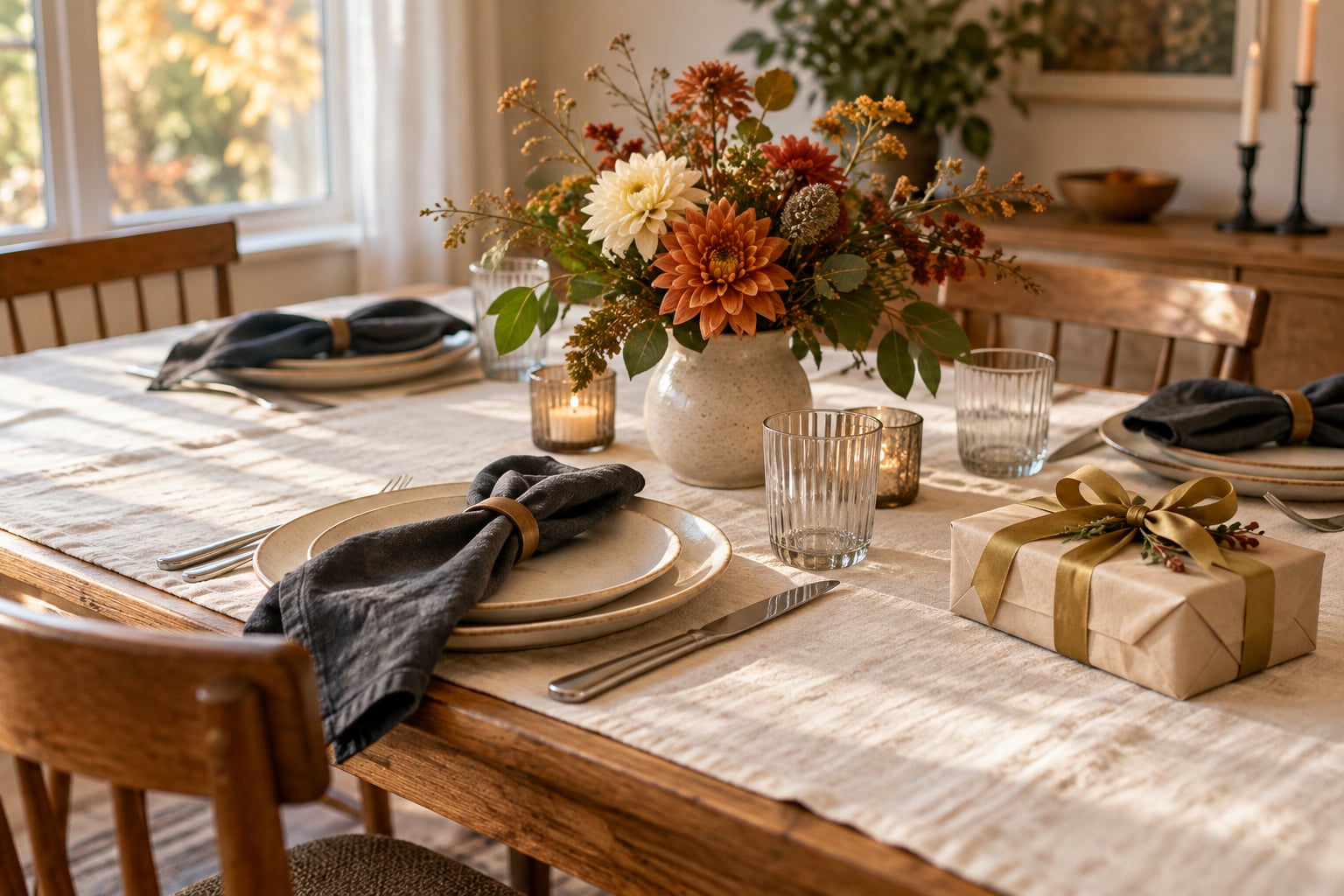
Decorations, elaborate place cards, a second dessert, and special serving pieces belong after the main decisions. Choose one small detail if you enjoy setting the scene: cloth napkins, a few seasonal branches, or handwritten names.
If your list starts growing, ask whether each addition helps people eat comfortably, feel welcome, or spend time together. That question makes it easier to set aside work that does not matter to you.
Your final planning checklist
- Guest count and arrival details confirmed.
- Menu agreed, with guest contributions assigned.
- Shopping list checked against the pantry.
- Appliance and preparation schedule written down.
- Seating, tableware, and serving pieces counted.
- One small task ready to hand to anyone who offers help.
A workable Thanksgiving plan leaves room for conversation and the unexpected. Once the essentials are covered, let the meal reflect the people around your table.