
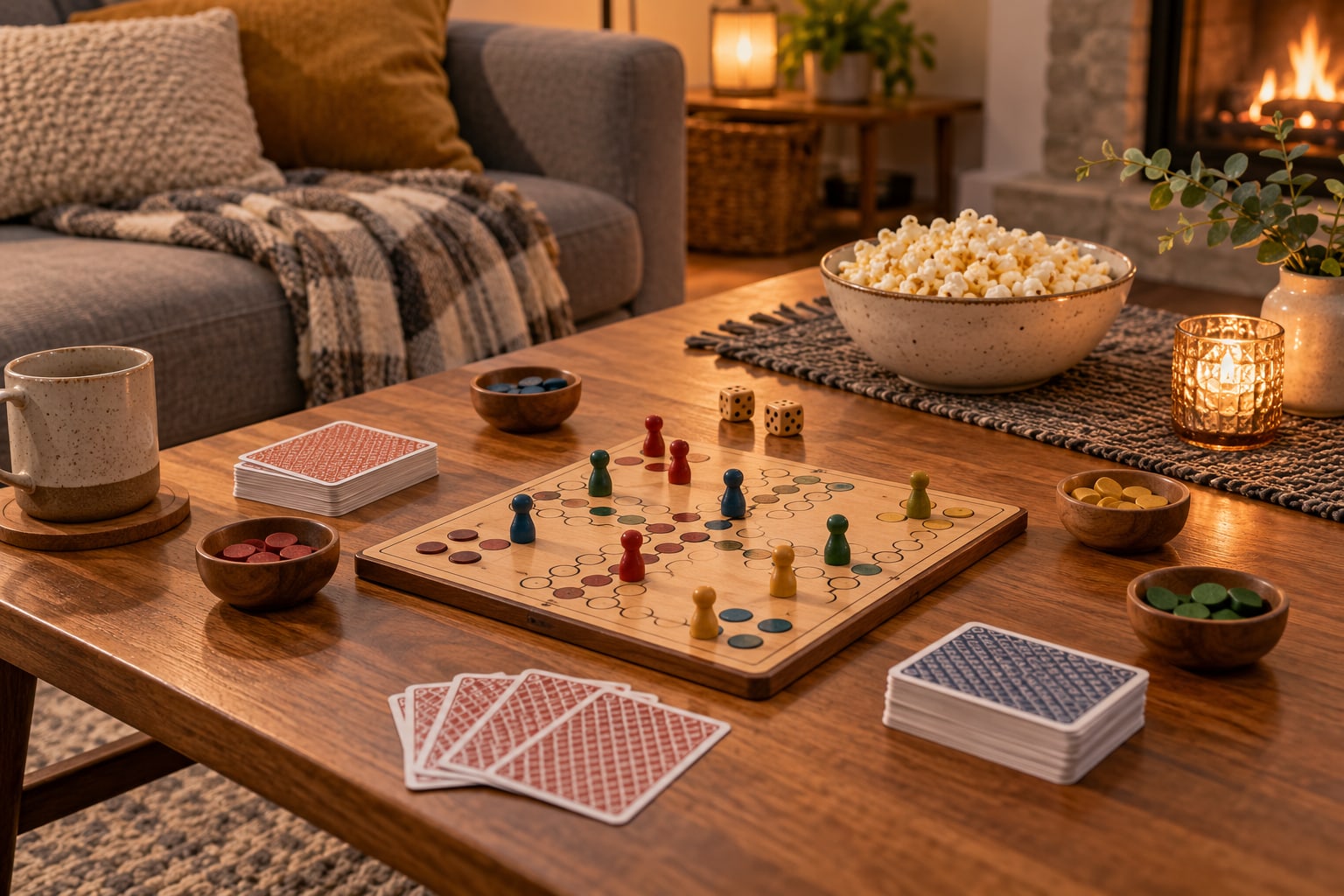
The best family game-night choice depends on the people at the table tonight. A game that worked on a quiet weekend may feel too complicated after a busy school day. Start with the time and energy you have, then choose a game that gives everyone a way to participate.
First, decide how long you want to play
For a short evening, choose something with quick rounds and an easy stopping point. Word clues, simple card games, drawing prompts, and guessing games can fit this kind of plan. Check the rules and expected playing time before you begin rather than assuming every card game is quick.
With a longer stretch of time, you can choose a game that needs more explanation or builds over several rounds. Leave space for learning, especially when someone is playing for the first time.
Match the game to the group
- Mixed ages: look for simple turns, limited reading, or a team format that lets an adult and a child contribute together.
- A quiet group: consider a familiar card game, a picture-based challenge, or a shared puzzle.
- A lively group: drawing, acting, or quick guessing rounds can give that energy somewhere to go.
- Different experience levels: choose a new game for everyone or a format where knowledge is shared across teams.
Use the age guidance on a game as a starting point, then consider the actual reading, memory, dexterity, and attention it requires. If someone needs an adaptation, agree on it before play so they can join comfortably.
Choose competition or cooperation
If your family enjoys a close contest, individual scores may be part of the fun. If losing tends to derail the evening, try working toward a shared goal or playing in changing teams.
Team games still need a little thought. Give each person a role so one confident player does not answer every question or make every decision. You might alternate who draws, who gives clues, or who makes the final choice.
Let two options do the work
Instead of asking everyone to choose from the whole cupboard, offer two suitable games: “Would we rather draw and guess, or play a card game?” Both options should fit the time and group you have already considered.
Keep a simple fallback ready. If the first choice turns out to be frustrating, switching after a round is fine. You are planning an enjoyable evening, and learning what your family likes is part of it.
Make a repeatable game-night plan
Set out the game before everyone gathers, clear enough space, and choose snacks that are easy to keep away from cards and pieces. Explain the goal first, demonstrate one turn, and answer questions as you go.
Finish while people still have some enthusiasm. Let family members take turns choosing at future game nights, with the same practical limits on time and complexity. A familiar routine with room for different preferences makes the next evening easier to plan.
Before shopping, use our guide to what to buy for game night—and what to skip to check what you already have.